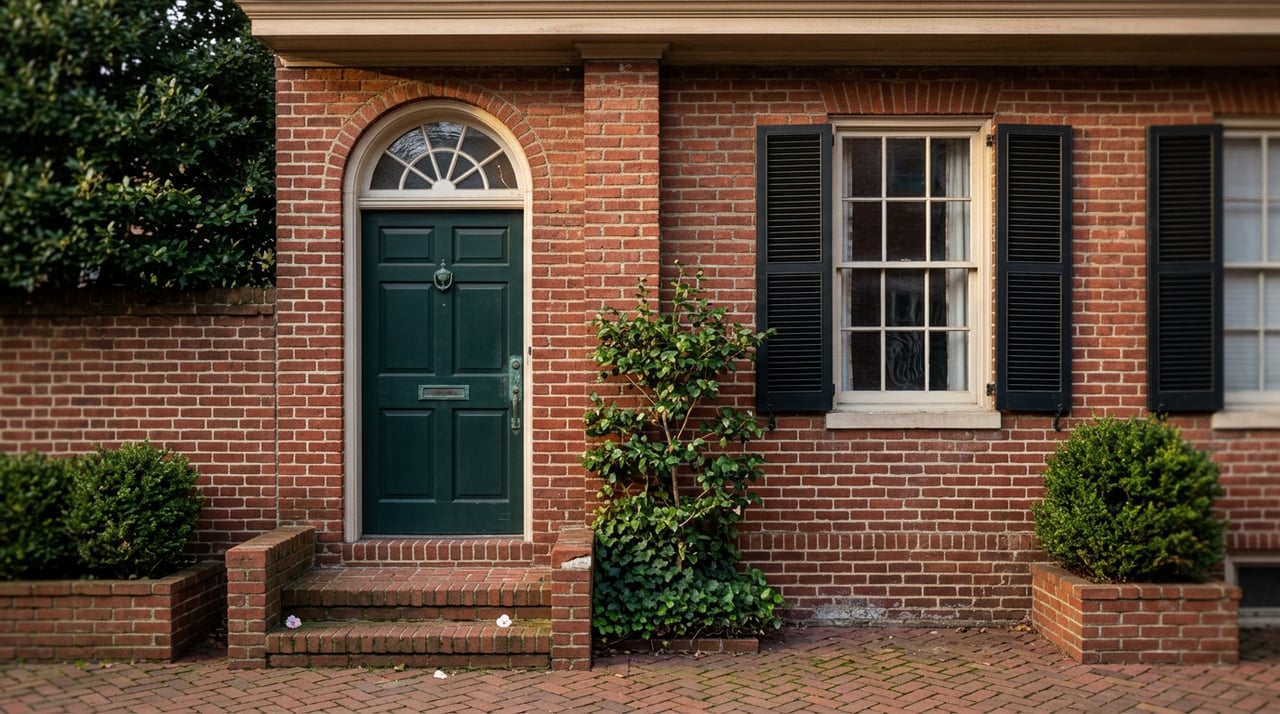
In Old Town, Your Listing Date Isn't Always Yours to Pick
A homeowner in the Old and Historic District calls a contractor about replacing a tired rear deck before putting the house on the market. The contractor quotes three weeks, materials included. Nobody on that call mentions the Board of Architectural Review. Nobody mentions that the deck sits close enough to a public alley to count as visible from a public way, which means the project needs a Certificate of Appropriateness before a building permit can even be requested. The three-week estimate was never wrong about the carpentry. It was just answering the wrong question.
This is the pattern worth understanding if you own a home inside Old Town's locally regulated Old and Historic Alexandria District, and you're weighing exterior work before you list. The clock that actually governs your timeline isn't your contractor's. It's the City's. And this particular August, that clock is more unpredictable than usual, because the rules it runs on are being rewritten in real time.
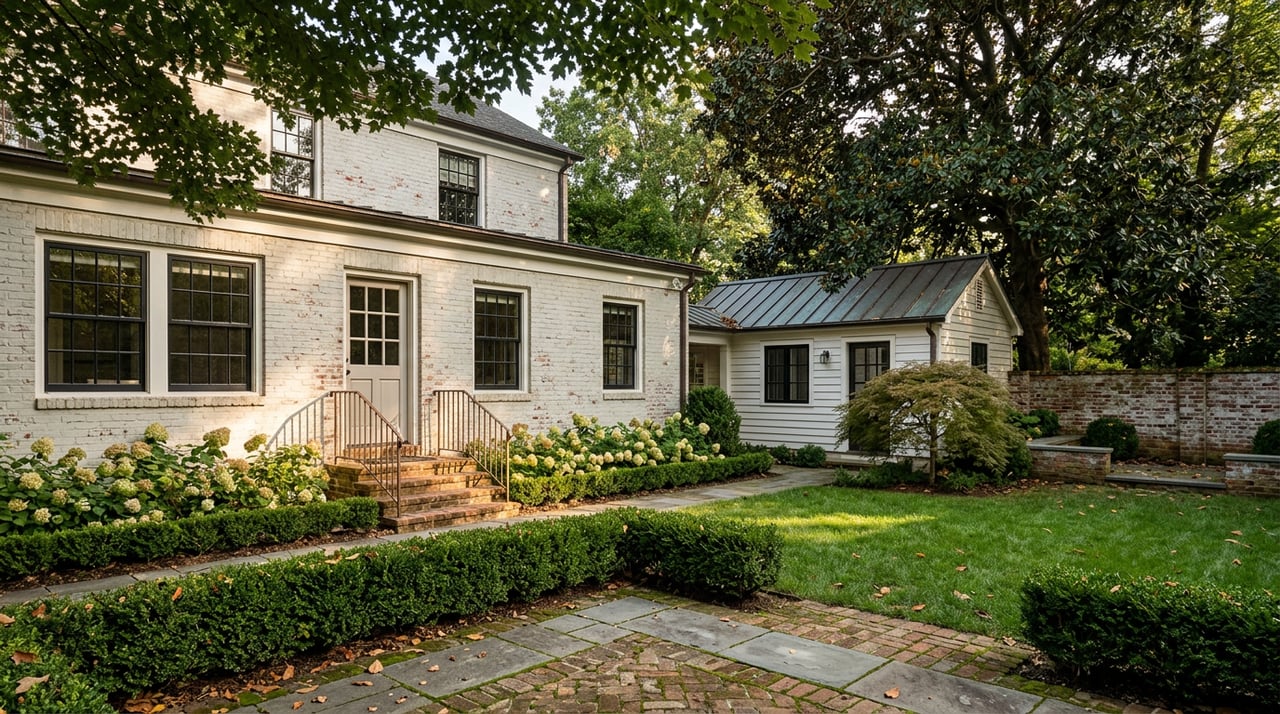
Alexandria's Board of Architectural Review exists to approve or deny changes to anything visible from a public street, way, or the Potomac River within the Old and Historic Alexandria District or the Parker-Gray Historic District, along with properties on the city's One Hundred-Year-Old Buildings list. Interior renovations are generally left alone. Exterior ones are a different conversation. Windows, doors, decks, roof structures, HVAC equipment, exterior lighting, paint on previously unpainted masonry: if it can be seen from the street, expect it to trigger review of some kind.
That review splits into two tracks. Minor, like-for-like repairs and routine maintenance can often be approved administratively by preservation staff, sometimes in a matter of days. Anything more substantial, a full window replacement, a new deck, an addition, goes to a public hearing. Those hearings happen only on the first and third Wednesday of the month, and the Board does not meet at all in August. Applications have to be complete at least 30 days before the hearing date they're aiming for. Once a project reaches a hearing, the City's own guidance puts the process at roughly 4 to 8 weeks from submission to decision, and a full exterior window or door project can run 2 to 4 months from first concept to permit in hand. Larger additions take longer still. If the Board denies or conditions your project in a way you disagree with, you have 14 days to appeal to City Council.
None of this is a criticism of the process. It exists because Old Town's brick facades and wood sash windows are the reason buyers pay a premium to live here in the first place. But it means the honest answer to "how long will this take" is never just the contractor's number. It's the contractor's number plus whichever review track your project falls into, plus whatever the City's hearing calendar happens to look like the month you file.
Here's the part that makes right now a genuinely different moment to be planning pre-listing work: Alexandria's Board of Architectural Review Design Guidelines Committee had been scheduled to hold a public meeting on Wednesday, August 19, 2026, from 7 to 9 p.m. at the Nannie J. Lee Memorial Recreation Center to review proposed updates to the design guidelines covering both historic districts. Draft chapters went up for public review on August 5, and the comment period runs through September 2, 2026.
The chapters under revision aren't obscure. They cover electric vehicle chargers, HVAC equipment, exterior lighting, security features, porches, roof decks, and balconies, which happen to be exactly the upgrades a seller is most likely to reach for before listing photos. An EV charger signals a move-in-ready home to a certain buyer. A rebuilt roof deck photographs well. A heat pump condenser is often unavoidable if the old system is failing. All three are currently governed by guidance the City itself says it's in the process of rewriting.
That doesn't mean your project is frozen. Existing guidelines remain in effect while the update moves through committee, and the City's Preservation office can tell you which review track applies to your specific project today. But it does mean a seller who files this fall without checking in with staff first is filing against a moving target, and a seller who waits to see how the new chapters land could be waiting past the point where it still helps their listing timeline.
The categories that most often surprise sellers, because they feel more like contractor decisions than City decisions:
Interior kitchen and bath remodels generally sidestep this entirely, unless they involve exterior venting, new window openings, or additions. That distinction is the one most likely to catch a seller off guard mid-project, when a contractor discovers a vent needs to move to the street-facing wall and the whole scope suddenly needs a Certificate of Appropriateness that nobody budgeted time for.
Here's why the timing actually matters and isn't just a compliance footnote. Citywide in Alexandria, homes that closed in July 2026 spent an average of 24 days on the market between listing and a ratified contract, according to MarketStats by ShowingTime data reported by ALXnow. The average sales price across all property types that month was $826,512, up 1.5 percent year over year, with single-family detached homes averaging $1,323,944. Zillow's home value index for Old Town specifically put the neighborhood's typical home going to pending in around eight days as of its most recent reading.
Set that against a BAR timeline that can run 2 to 4 months for a routine exterior project, and the mismatch is the whole point. If your neighbor's home is going pending in a little over a week and yours is still waiting on a Certificate of Appropriateness for a deck rebuild, you haven't lost a construction schedule. You've lost the window where your home would have competed against today's buyer pool instead of whoever is looking three months from now, in a different rate environment, against different inventory. The BAR process doesn't just add weeks to a project. It can quietly move your listing into an entirely different market than the one you priced against.
Contact Preservation staff before you contact a contractor, not after. Their number is 703-746-3833, and a five-minute call can tell you whether your specific project qualifies for administrative approval or needs a hearing, which changes your whole timeline. If a hearing looks likely, ask about a concept review first. It's not required, but it lets you get informal feedback before committing to final drawings, which avoids the more expensive scenario of a full application getting sent back for revisions. Remember there's no BAR hearing in August at all, so anything filed too late this summer is effectively pushed to a September date at the earliest. And if speed matters more than scope, prioritize the categories staff can approve administratively over the ones requiring a public hearing. A repaired sash window or matched material replacement moves in days. A new roof deck does not.
Does painting my brick house need BAR approval before I list? Only if the brick has never been painted before. Repainting a surface that's already painted is generally allowed. Painting previously unpainted masonry is discouraged and typically triggers review.
What happens if I do the work without approval? The City can issue a stop-work order, assess fines, and require the work to be restored to its previously approved condition, which is a far more expensive and time-consuming outcome than waiting for approval in the first place.
Should I wait until the new design guidelines are adopted before starting a project? Not necessarily. The current guidelines remain in force during the committee's review, and the timeline for final adoption isn't set. The better move is calling Preservation staff directly and asking how your specific project reads under both the current rules and the draft language.
If you're weighing exterior work on an Old Town home before you list, the question isn't whether the project is a good idea. It almost always is. The question is whether you've built your listing timeline around the City's calendar or your contractor's, because right now those two calendars are further apart than usual, and the gap between them is exactly the kind of thing that turns a well-planned sale into a frustrating one.
If you're thinking through the sequencing on a specific property, Christina Berkowitz has walked Old Town sellers through this exact process and can help you map a realistic listing date around it. Let's Connect.
This article is general information, not legal, tax or financial advice. Consult a qualified professional about your situation.
Nina is chosen for her strategic approach, strong negotiation skills, and ability to navigate complex transactions with clarity and confidence. Her corporate sales background gives her an edge in pricing strategy, contract execution, and client advocacy. She serves Fort Hunt and surrounding Northern Virginia, delivering stronger outcomes at every stage of the process.

Christina "Nina" Berkowitz
109 S PITT ST ALEXANDRIA, VA 22314