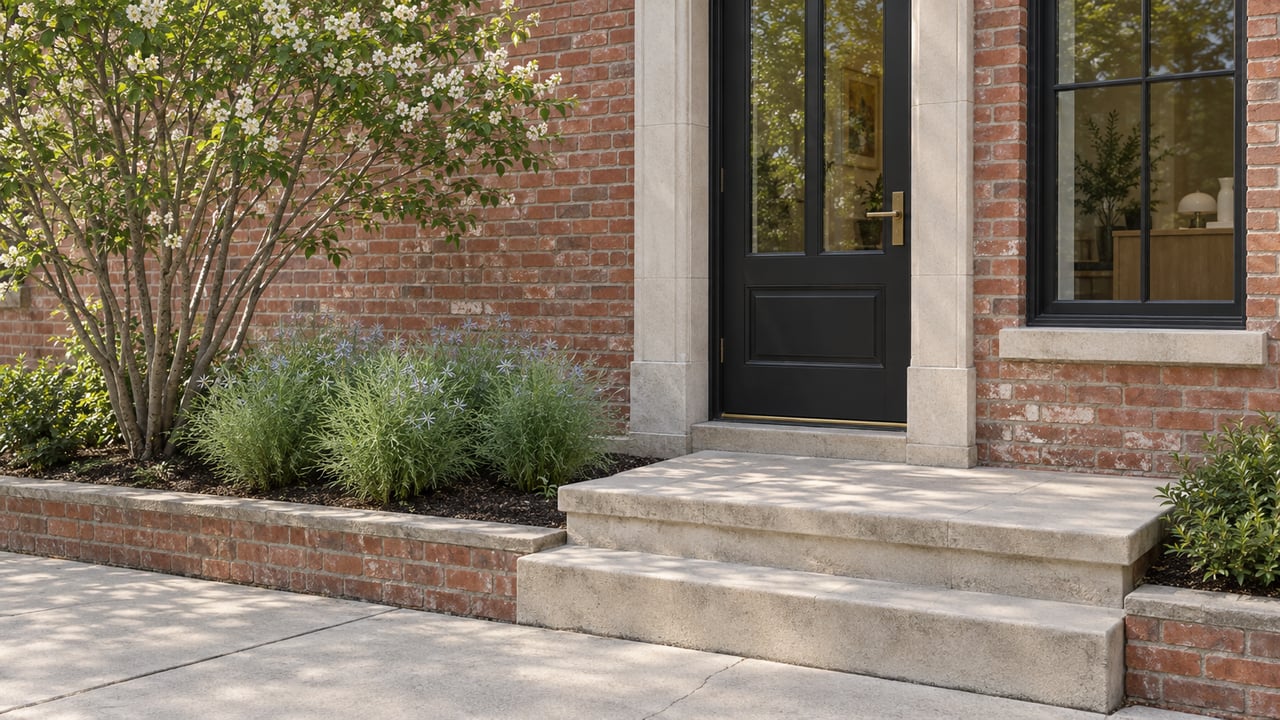
Potomac Yard Trail in Alexandria: A Walkable Local Loop
Can you get from the splash pad at Potomac Yard Park to a tablet-ordered lunch built around a Bobby Flay menu, then on to a Metro platform, without touching a car? As of this fall, yes. A year ago, the pieces existed, but they didn't connect the way they do now.
That's the part worth sitting with. Potomac Yard didn't become walkable through one plan executed on one timeline. Four separate projects, run by four separate institutions with four separate reasons for existing, now shape the same stretch of Potomac Yard. A city parks department built a trail and a splash pad. A regional transit authority opened an infill Metro station forty years after it was first proposed. A land-grant university opened a graduate campus with a public roof deck. A venture-backed food company put its fourth Virginia location into a strip of Richmond Highway that used to be rail yard. None of these organizations were coordinating with each other on a shared vision of your Saturday. They finished on different schedules, and now the ground between them is a loop you can actually walk.
Start with the Metro station, because it's the oldest idea on this list and the newest thing you can use. The Potomac Yard-VT station opened on May 19, 2023, the 98th stop in the Metro system and only the second infill station ever built into an existing line. At the ribbon cutting, Metro Board Chair Paul Smedberg called it a station forty years in the making. Virginia Tech president Tim Sands, standing at the same event, said the university was honored to have its name on the station, reflecting our commitment to serve this community and the commonwealth for many years to come.
That "VT" in the station name is not decorative. The station's more elaborate design, a 520-foot enclosed bridge with elevator access rather than the original sloped ramp, was funded through a $50 million state grant that Alexandria received specifically as part of the Commonwealth's Amazon Headquarters and Virginia Tech Innovation Campus incentive package. In other words, the same money that helped land Amazon's HQ2 across the border in Arlington also paid to upgrade how you physically get off the train in Potomac Yard. The station and the university campus were never separate stories. They were financed as one.
The campus itself caught up about two years later. Virginia Tech's first academic building at the Innovation Campus, an eleven-story, 300,000-square-foot structure at 3625 Potomac Avenue, opened to students, faculty, and staff in spring 2025. The building was designed around a roof deck meant to hold up to 300 people, alongside classrooms, a cyber-physical lab, and a drone testing cage. Whether or not you have any reason to be inside it, the deck functions as a public-facing landmark now sitting a few blocks from the Metro platform and the trail.
The trail itself is older than either of those and finished in pieces you'd never guess from walking it today. The Potomac Yard Trail opened in segments starting in 2011, with the last stretch completed in 2015, years before the Metro station or the university campus existed. Today the city describes it as a 2.1-mile paved path running from the Braddock Road Metro station north along Potomac Avenue to a connection with the Four Mile Run Trail, lined with exercise equipment, basketball and tennis courts, and multiple playgrounds. A 4.5-acre extension called North Potomac Yard Park, built around University Drive, was dedicated on October 19, 2024, adding another stretch of trail and another playground to the north end.
Wonder is the newest piece and the one most people already know about. The food hall opened at 3615 Richmond Highway on January 9, 2026, its fourth Virginia location after Rosslyn, Franconia, and Reston, and its tenth outpost in the Washington-Baltimore area overall. The Potomac Yard menu runs through more than twenty chef-driven concepts under one kitchen and one ordering system: Bobby Flay Steak, Jota by José Andrés, Streetbird by Marcus Samuelsson, Di Fara Pizza, SriPraPhai, Tejas Barbecue, and Hanu Poke among them. Alexandria City Council members and the Alexandria Economic Development Partnership showed up for the ribbon cutting, which tells you the city was already treating this as part of the same story as the Metro station and the university building, not a separate retail footnote.
Put those four things on a map and the loop is straightforward. Start at Potomac Yard Park, at the interactive fountain between the two fenced playgrounds. Head north on the Potomac Yard Trail past the basketball and tennis courts, through the North Potomac Yard Park extension, until the path meets the Four Mile Run Trail. From there you can keep going into Crystal City and Long Bridge Park, or pick up the Mount Vernon Trail toward the 14th Street Bridge into Washington. Turn around and head south instead, and the trail runs back past Wonder's storefront on Richmond Highway, then continues toward Braddock Road, where a short connector spur crosses toward the King Street Metro station and Old Town.
None of that required a car at any point. It also wasn't true two years ago, because the northern half of the trail through the old Potomac Yard Center shopping strip is still, technically, a placeholder. That stretch runs as a sidepath along Potomac Avenue rather than a proper separated trail, because the shopping center itself, the one with the Target and the movie theater, is slated for a larger redevelopment that hasn't broken ground. Once that project moves, the city has said it will replace the temporary path with the permanent northern extension. Until then, you're walking a good trail with one honest gap in it, and that gap happens to run right past the food hall.
There's more construction in the pipeline nearby, if you're the kind of resident who tracks these things. Arlington's own capital budget shows work starting in fiscal year 2026 on protected bike lanes and crosswalk improvements along the corridor between the Crystal City area and Four Mile Run, expected to run roughly two years. That's not an Alexandria project, but it sits directly on the route north out of Potomac Yard, so anyone doing the full loop into Arlington this year and next should expect some detours along the way.
Any one of these four things, taken alone, is a minor local update. A Metro stop. A food hall. A university building. A trail extension. Cover them individually and you get four small stories that don't add up to anything a resident would reorganize a weekend around.
Together, they're a different kind of story: four institutions that had no obligation to sequence their work around each other ended up contributing to the same walkable loop. One large incentive package (the Amazon HQ2 deal) touched more of them than most people realize. The Metro station's nicer design exists because of that grant. The university's presence exists because of that grant. The food hall was riding the wake of density that grant helped create. The projects now connect despite following different schedules.
That's the part that's easy to miss if you only hear about these things one at a time, in whatever order the local news cycle happens to surface them. The Metro station story ran in 2023. The park extension story ran in 2024. The university building barely made news at all when it opened in 2025, because ribbon cuttings for academic buildings rarely do. The food hall story ran loudest of all, in January 2026, because food coverage travels faster than infrastructure coverage. Read separately, in that order, they look like unconnected updates about a neighborhood that keeps getting things. Read together, they explain why this particular fall is the first one where the whole loop actually works end to end, gap in the shopping center notwithstanding.
If you already live along this stretch of Alexandria, that's the useful thing to know before the weather turns: this is likely the first autumn where a Saturday morning at the playground, a Wonder lunch, and a walk to the Metro or up toward Long Bridge Park are all genuinely one outing instead of three separate trips.
I grew up in this part of Alexandria and I'm still finding new pieces of it worth walking. If you've noticed something changing in your own corner of the neighborhood, whether it's a trail, a new storefront, or something the city hasn't finished yet, I'd like to hear about it. Reach out through Christina Berkowitz and let's compare notes.
Nina is chosen for her strategic approach, strong negotiation skills, and ability to navigate complex transactions with clarity and confidence. Her corporate sales background gives her an edge in pricing strategy, contract execution, and client advocacy. She serves Fort Hunt and surrounding Northern Virginia, delivering stronger outcomes at every stage of the process.

Christina "Nina" Berkowitz
109 S PITT ST ALEXANDRIA, VA 22314