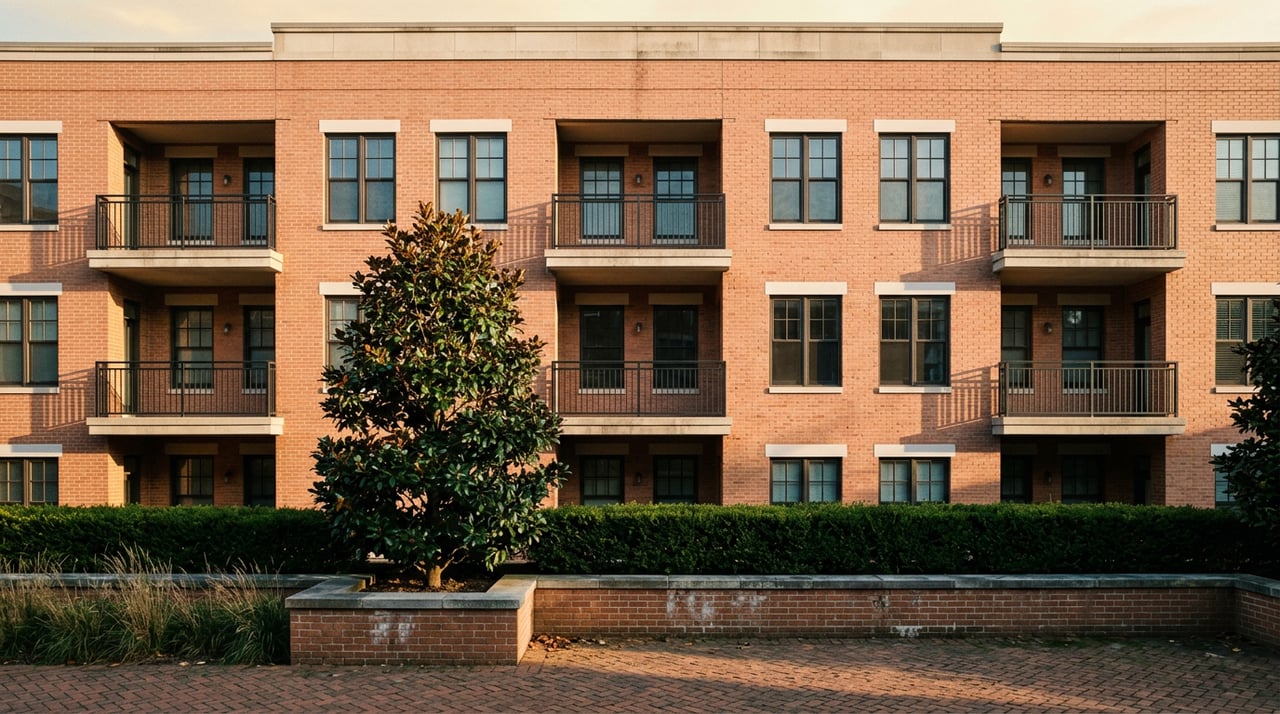
The Rule That Just Changed What an Arlington Condo Is Worth
Arlington's average home sale price hit $1,012,720 in July, the second-highest month on record after April's $1,061,497. If you've seen that number on a portal or in a market recap, it probably reads like an all-clear signal: Arlington is hot, prices are up, get in while you can. For anyone shopping single-family homes, that reading holds. For anyone shopping condos, it doesn't, and a federal rule change that took effect earlier this month is a big part of why.
On August 3, 2026, Fannie Mae and Freddie Mac tightened the underwriting standard that decides whether a condo building qualifies for a standard conventional mortgage at all. The change removes an exemption that used to let large down payments substitute for a full building review, sets a hard cutoff on a building's insurance deductible, and forces associations to prove they're funding reserves at a specific level. None of that shows up in a listing price. All of it shows up at the mortgage stage, sometimes after a buyer has already fallen for a unit.
Start with what the countywide number actually contains. Bright MLS data reported through ARLnow breaks July's 227 closed sales into three segments, and the gap between them is the story the average erases.
| Segment | Avg. Sales Price, July 2026 | Year-Over-Year Change |
|---|---|---|
| Single-family detached | $1,605,272 | +19.1% |
| Attached homes (townhouse, rowhouse, condo combined) | $601,471 | +9.4% |
| Condo-only | $518,446 | +3.7% |
Single-family homes are doing almost all the work on that headline average. Condos, taken alone, moved less than four percent, a fraction of what the county's marquee number suggests. One analyst ARLnow quoted in late August put the mechanism plainly: buyers are finding more choices among condos and attached homes, while supply of single-family detached homes remains very limited. Scarcity at the top of the market is doing the pulling. The condo segment isn't cooling because buyers don't want it. It's moving at its own, slower pace because there's more of it to choose from and because financing it just got more complicated.
Before this month, a buyer putting down a large enough payment could sometimes sidestep a full review of a condo building's finances. That workaround is gone. Every established condo project with more than ten units now goes through a Full Review regardless of down payment size or the borrower's credit profile.
Three pieces of that review matter most for anyone shopping in Arlington's condo stock right now. If the association's master insurance policy carries a per-unit deductible over $50,000, the building is classified non-warrantable, which pushes financing out of conventional territory and into specialized, higher-cost loan products. If a lender leans on a reserve study to confirm the building is financially sound, that study now has to show the association funding reserves at the highest recommended level the study identifies, not a lower baseline number boards used to be able to justify. And underwriters are now required to read recent board meeting minutes and engineering reports looking for unresolved structural repairs or code violations, not just financial statements.
None of this means an Arlington condo is a bad idea. It means the building matters as much as the unit, and that distinction didn't carry this much financing weight a month ago.
Here's the local wrinkle that makes this rule change land differently in Arlington than it might in a state with stricter condo law. Virginia sets no minimum dollar amount or percentage target for how well a condo association has to fund its reserves. Boards can lean on reserves, special assessments, or borrowed funds in whatever mix makes sense to them, as long as they disclose it accurately. Florida, by contrast, now requires a Structural Integrity Reserve Study for any condo three stories or taller, with a mandated 25-year funding plan behind it.
That gap means two similarly priced Arlington condo units, one along the Rosslyn-Ballston corridor and one in National Landing, can carry very different reserve health even though nothing about the listing itself would tell you that. A board that has been conservative about reserve contributions for years is now walking into a federal review standard that assumes a specific, higher funding level. A board that hasn't been conservative is walking into the same review with less room to explain itself.
The logic cuts both directions on age. A newer building in Shirlington typically needs smaller reserves simply because fewer of its components are near the end of their useful life. An older complex in Pentagon City should, by that same logic, be carrying larger reserves to match its aging systems, roofs, elevators, and garages that a newer building hasn't had to think about yet. Building age isn't a red flag by itself. A reserve balance that hasn't kept pace with what the building's own study says it needs is the actual thing to watch for, and that's a question worth asking regardless of which corridor you're shopping.
Virginia law already gives condo buyers a real tool for this. Once you're under contract, the seller has to deliver a resale certificate, and you get a statutory right to cancel within three days of receiving it, a window many standard Virginia contracts extend to seven. That window exists to let you read the documents, not just skim them. Given what changed on August 3, it's worth using that time to specifically pull:
A low monthly condo fee used to read as a selling point. Under the current review standard, it's a question. A building keeping fees low by underfunding its reserve account is exactly the profile the new rule was written to catch.
Attached homes, the category that bundles Arlington's townhouses and rowhouses in with condos, averaged $601,471 in July, up 9.4% year over year, comfortably ahead of the condo-only number. Fee-simple ownership is part of why. A townhouse buyer isn't subject to a building-wide financing review the way a condo buyer is, because there's no shared structure or master insurance policy standing between the buyer and the lender. That's not an argument for or against either property type. It's a reason the same countywide average describes three genuinely different buying experiences depending on which segment you're actually shopping.
Does this mean I shouldn't buy a condo in Arlington right now? No. It means the building's financial paperwork now carries more weight in whether you can get a standard loan at all, so it's worth reviewing before you're emotionally attached to a unit, not after.
Does the new Full Review apply to every condo building? It applies to established projects with more than ten units. Smaller buildings and new construction follow different review paths, so confirm which category a specific building falls into early.
Is Arlington's condo market actually weak? The data says slower, not weak. A 3.7% year-over-year gain in the condo segment is still a gain. It's simply a fraction of what's happening in the single-family segment, and financing friction is a plausible part of why the gap exists.
Does Virginia require the same reserve study Florida does? No. Virginia has no statutory minimum reserve funding requirement. That's precisely why reserve health varies so much building to building here, and why asking to see the actual study matters more than assuming a baseline exists.
Arlington's condo stock spans decades of construction and just as many approaches to funding a reserve account. The average price on the county report can't tell you which building you're looking at. The reserve study can. If you're comparing a unit in Rosslyn against one in National Landing or weighing a Ballston condo against a townhouse in a neighboring block, Christina Berkowitz can help you read the paperwork that actually decides whether the loan closes. Let's Connect.



Nina is chosen for her strategic approach, strong negotiation skills, and ability to navigate complex transactions with clarity and confidence. Her corporate sales background gives her an edge in pricing strategy, contract execution, and client advocacy. She serves Fort Hunt and surrounding Northern Virginia, delivering stronger outcomes at every stage of the process.

Christina "Nina" Berkowitz
109 S PITT ST ALEXANDRIA, VA 22314