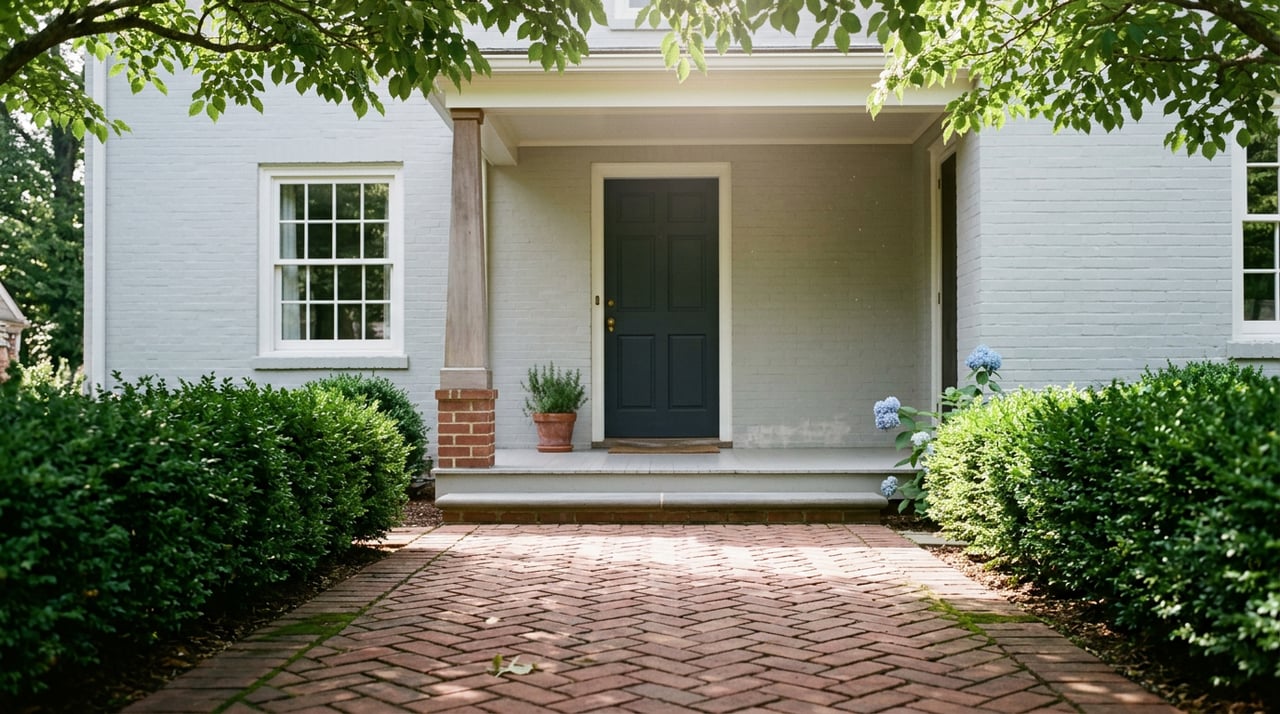
Rosemont Alexandria Housing Market Beyond the Median
The most useful number in Alexandria real estate is also one of the most misleading. Redfin pegged the citywide median at roughly $688,000 for the three months ending April 2026. In Rosemont, over the trailing twelve months, the median sat closer to $1.225 million.
That gap is not a curiosity. It is the whole story. Rosemont is a small, historic, transit-anchored micro-market that behaves almost nothing like the city it belongs to, and the citywide median is what makes people underestimate how it prices, how fast it moves, and what a given budget actually delivers on the ground.
Alexandria's headline median blends West End condos, Landmark townhomes, waterfront estates, and streetcar-suburb bungalows into a single figure. It is a true average and a nearly useless one for a buyer choosing between neighborhoods.
A closer look at fee-simple closings in Del Ray and Rosemont between January and mid-June 2026 sharpens the picture. Across 51 transactions, the median home sold for a full 100% of asking, two out of three closed at or above list, and 39% cleared their asking price outright. Nationally that spring, fewer than a third of homes did.
The gap between the citywide median and the Rosemont median is not evidence that Rosemont is "hot." It is evidence that averaging a scarcity market into a broader city hides the mechanism entirely.
Northern Virginia was already tight in the spring of 2026, running roughly 1.93 months of supply against about 4.5 months nationally. Rosemont ran tighter still, with only a handful of active listings between it and Del Ray at any given moment.
Three structural facts explain why supply is the binding constraint here, not buyer enthusiasm:
A neighborhood with a fixed border, protected architecture, and long tenure produces a small, steady dribble of listings meeting demand that consistently outnumbers it. Price and speed follow from that arithmetic, not from any particular season's buyer mood.
Rosemont is one of the only Alexandria neighborhoods where a single-family, detached, historic home sits inside walking distance of two WMATA stations, King Street–Old Town and Braddock Road, both on the Blue and Yellow lines. King Street–Old Town also connects to Amtrak and VRE, and the free King Street Trolley runs every 15 minutes between the station and Market Square.
That combination is scarce. Old Town offers walkable transit and history but leans toward attached rowhouses and condos. Del Ray offers a walkable main street on Mount Vernon Avenue but sits farther from a Metro platform. Rosemont is the intersection: a detached-home, tree-lined-street experience with a rail commute measured in blocks.
Buyers pay for that intersection whether they realize it or not, and it is the reason a Rosemont bungalow can appraise and close well above what a similar bungalow in a less transit-anchored Alexandria pocket would command.
Here is how the price bands roughly translate on the ground in Rosemont, based on recent listings and closings and the housing types the neighborhood actually contains:
| Price band | What tends to be available |
|---|---|
| Under $900K | Smaller bungalows or two-bedroom townhomes, often needing updates, or a Rosemont-adjacent condo along the corridor |
| $900K–$1.4M | Original or lightly updated Colonial Revivals, Arts and Crafts houses, and Craftsman bungalows on modest lots |
| $1.4M–$2.1M | Fully renovated period homes with expanded footprints, primary suites, and finished lower levels |
| Above $2.1M | Down-to-the-studs rebuilds by named local builders, often on premium blocks near the King Street Metro |
The top of that range is not hypothetical. A five-bedroom, seven-bath renovation of a 1908 home at 11 Cedar Street, reimagined by Bluestone Builders on a 6,500-square-foot lot a half block from the King Street Metro, came to market in February 2026 at $2,945,000. That is what the ceiling looks like when a historic Rosemont shell is fully rebuilt to current expectations.
Three specific frictions catch out-of-market buyers, and each one traces back to the same scarcity story.
Days on Market is a small-sample statistic here. In a neighborhood with only a handful of active listings at a time, one lingering property can drag the average DOM up by weeks even when the underlying market is moving quickly. Homes.com's trailing figure for Rosemont sits around 14 days, but the useful question for a buyer is not the average, it is where a specific listing falls inside it. A well-prepared home in a preferred block often trades in a single weekend. A quirky floor plan on a busier edge can sit.
The first thirty days set the price. With so few comparables closing each month, buyers and their agents rely heavily on how a listing was received in its opening window. A home that goes stale is expensive to reset, because the same shallow pool of active Rosemont buyers has already seen it. Sellers who list ambitious and adjust reactively tend to leave money on the table; sellers who price to the first weekend more often clear at or over ask.
Historic-district review shapes what you can change. Rosemont's national historic district designation does not freeze the neighborhood in place, but it does inform what alterations, additions, and exterior changes go smoothly and which ones do not. Buyers planning a rear addition, a dormer, or a full-facade renovation should stress-test those plans against the district's character before, not after, going under contract. This is the kind of local friction that only shows up during a transaction, and it is worth naming out loud in the offer conversation.
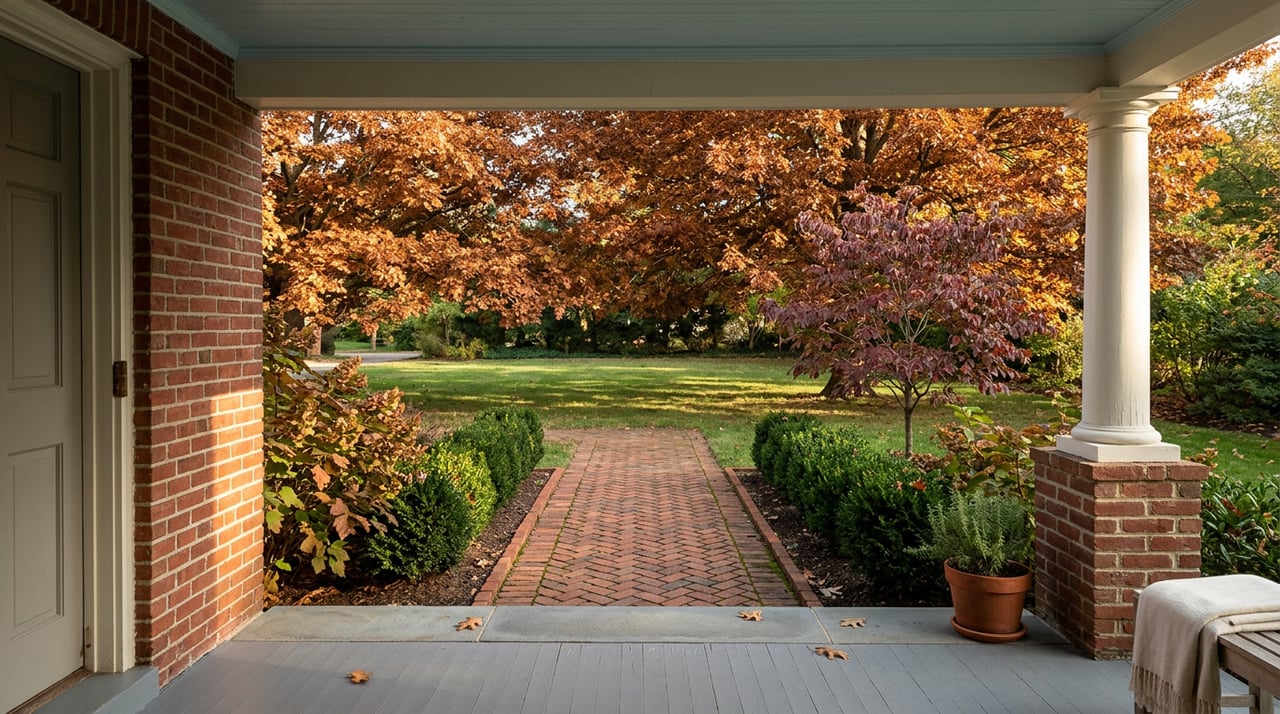
Numbers only go so far without the texture that makes people stay. In Rosemont, that texture is specific: Grape + Bean sits in the neighborhood's only surviving period commercial building and functions as the informal daily meeting spot. Beach Park, Sunset Mini Park, and Hooff's Run Park & Greenway anchor the recreational grid. The George Washington Masonic National Memorial fills the southern skyline from many blocks. Naomi Brooks Elementary, in the 1929 Colonial Revival building formerly known as Maury, is the site of what is believed to be the city's longest-running Fourth of July celebration, dating to 1967.
None of that shows up on a Redfin page. All of it shows up in tenure, which is the reason inventory stays thin.
Rosemont is dominated by detached single-family homes in a nationally registered historic district with two nearby Metro stations. The Alexandria median averages in condos, townhomes, and less transit-anchored areas of the city, which pulls the citywide figure well below what a Rosemont buyer actually encounters.
Recent data suggests yes, though at a measured pace. The Rosemont trailing-twelve-month median was up roughly 6% year over year through mid-2026, and the 22301 ZIP code that covers Del Ray and Rosemont has posted some of the strongest appreciation in the city. Scarcity, not speculation, is the driver.
It affects exterior changes and additions more than interior work. Owners routinely modernize kitchens, baths, and layouts. Facade changes, additions visible from the street, and demolition of contributing structures deserve early homework and, in most cases, a conversation with the city before you finalize plans.
More often than not for a well-prepared home in the January-through-June window. Roughly two out of three Del Ray and Rosemont fee-simple homes closed at or above asking in the first half of 2026. That is a base rate, not a guarantee, and it argues for a clean, decisive offer strategy rather than a hopeful one.
If you are weighing Rosemont against Del Ray, Old Town, or a nearby streetcar-suburb pocket, the citywide median is the wrong yardstick. What matters is which blocks, which price band, and which floor plan fit both the way you want to live and the way this specific micro-market clears. Christina Berkowitz is glad to walk through recent Rosemont comparables, current inventory, and offer strategy in plain terms. Let's connect.
Nina is chosen for her strategic approach, strong negotiation skills, and ability to navigate complex transactions with clarity and confidence. Her corporate sales background gives her an edge in pricing strategy, contract execution, and client advocacy. She serves Fort Hunt and surrounding Northern Virginia, delivering stronger outcomes at every stage of the process.

Christina "Nina" Berkowitz
109 S PITT ST ALEXANDRIA, VA 22314